Entity Optimisation
Entity Optimisation: One Clear Identity Across Google and AI Assistants
Entity optimisation gives search engines and AI assistants one verifiable set of facts about your business: who you are, the people behind it and what you offer. We run it inside our Generative Engine Optimisation programme or as a separate project, and senior SEOs make every schema and profile decision.
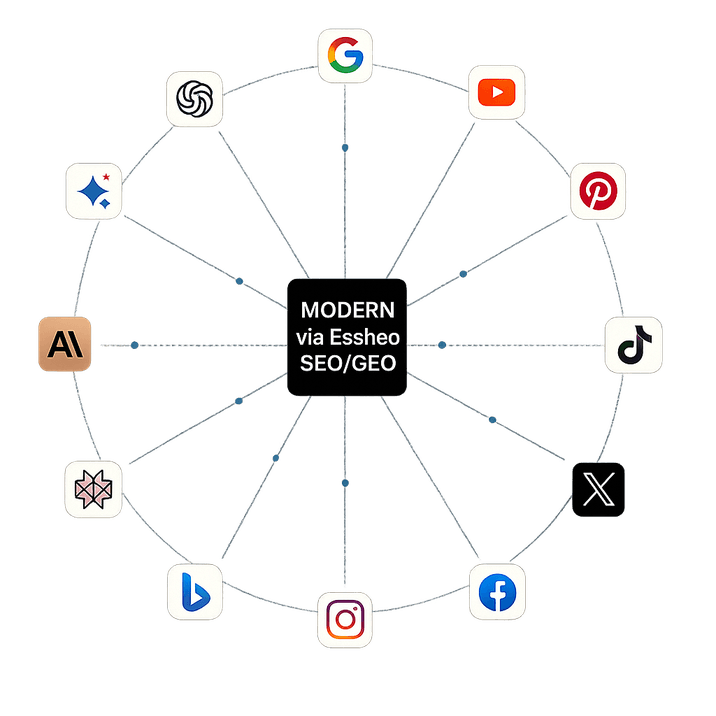
- Search platforms optimised, from Google to ChatGPT, Perplexity, Reddit and YouTube
- 24
Some of the brands we have worked with




Who this is for
When search engines are unsure who you are
Mixed up with a namesake
Another business or person shares a name close to yours. Search engines and AI assistants can confuse the two, or attach a mention of you to the other business.
Your experts go uncredited
Your founder or specialists are known in your field, but nothing on your site or profiles ties them to the business in a form machines can read. Person schema makes that expertise machine-readable.
Your details differ between profiles
An old address lingers in some directories, the phone number varies between listings, and LinkedIn and Crunchbase describe the business differently. When details conflict like this, AI models are less likely to cite the business.
A new brand with no footprint
Your website is new and starts with zero domain authority, as Future Training's did. For that renewable energy training provider, entity optimisation meant clear brand positioning and consistent mentions across platforms, with organisation schema in its plan.
What we do
Where entity work fits in GEO
Entity optimisation is the part of our Generative Engine Optimisation programme that deals with the facts about your business. One team runs it alongside your SEO, and it rests on Technical SEO rather than profile creation alone, so the markup does its job.
AI Visibility Audits include an entity consistency review, so we know where your details conflict before any fix goes in.
How Google and AI assistants read a business
To a search engine, an entity is anything it can identify as one distinct thing: a business, a person, a product. Google holds these, and the connections between them, in its Knowledge Graph, which is where knowledge panels come from.
AI answers draw on what good SEO already produces: clearly defined entities, well-structured content and mentions on authoritative sites. Language models also learn which brands go with which subjects from forums, reviews, news and comparison content. Where your site, profiles and Wikidata agree, a model meets one version of you; conflicting descriptions, addresses and service lists confuse it.
What our entity optimisation covers
Five areas make up the work; your audit decides where we start.
Structured data that names you
Organisation, person, product and FAQ schema across your site, validated, then monitored so that a later redesign cannot quietly remove it.
Matching details everywhere
The same name, address and phone number on Google Business Profile and on every directory and social profile that feeds entity data.
Telling you apart from namesakes
Organisation and person schema says which business and which people are yours, and your LinkedIn, Crunchbase and directory profiles are tied together, so each source backs up the rest.
Wikidata and Wikipedia, realistically
Help to make your Wikidata entry accurate and keep it so, since AI systems take entity data from reference sources like it, and a straight view on Wikipedia.
Mentions beside trusted names
Coverage alongside established names in your field through Digital PR, and discussion through Reddit GEO, both shaping which topics your brand is associated with.
How we check what engines understand
Four measures show whether engines understand you: whether a knowledge panel appears for your name, whether your details match across the directories we track, whether mentions of your brand are growing and how accurately AI assistants describe you. We track all four over time. AI descriptions come from your approved prompts, run monthly on specialist platforms and in scripts we wrote; each report shows the trend.
How it works
Entity optimisation in four stages
Entity signals compound over time, so we build them in order instead of chasing quick wins.
Related services
Other GEO and AEO services
Gemini Optimisation
Gemini optimisation works on what Google's AI tells buyers about you, in AI Overviews, AI Mode and Gemini itself.
Generative Engine Optimisation
When your customer asks ChatGPT, Google or Perplexity who to use, one or two brands get named and the rest are invisible.
LLM Optimisation
LLM optimisation makes your website readable to language models: open to their crawlers and clear enough to be understood accurately.
Quora Link Building
We act as your Quora marketing agency, answering the questions your buyers already ask on Quora in replies that Google can show and AI assistants can cite.
Reddit Link Building
As a Reddit marketing agency, we get your brand into the subreddits your customers already read, through posts and comments that add to the discussion.
AI Visibility Audits
Most businesses have never checked whether ChatGPT or Google's AI Overviews recommend them, their competitor, or nobody at all.
Insights
AI SEO Guides
How to Measure Success From Generative Engine Optimisation
AI SEO Guides
What ROI Can Businesses Expect From GEO Services?
AI SEO Guides
How Much Traffic Can AI Search Generate for Your Business?
AI SEO Guides
Is GEO Worth Investing In? A Business Case for AI Search Optimisation
AI SEO Guides
How AI-Powered Search Engines Decide Which Brands to Recommend
AI SEO Guides
Google’s AI Overviews: What They Mean for Your Business
AI SEO Guides
FAQs
Frequently Asked Questions
SEO aimed at how engines understand your business, rather than at the searches individual pages compete for; some call it entity SEO. Your business is an entity, as are its people and products. Keyword work still matters; entity optimisation adds schema, matching profiles and trusted mentions so engines and AI assistants can verify who you are.
Google's record of businesses, people and products and the links between them, and the source of the knowledge panel some searches show. Nobody outside Google controls what it holds. What you can influence is the evidence: your facts stated clearly and consistently on your own site and everywhere else they appear.
Google decides whether one appears, drawing on its Knowledge Graph. You can make your business easy to recognise: organisation schema, matching profiles, Wikidata where it fits and mentions on trusted sites. Nobody outside Google can guarantee a panel, so treat any promise of one with suspicion.
Ask the assistants what your buyers ask, then check each answer against your name, services, locations and people. Repeat it on a schedule, as the models are probabilistic. AI tools help us test how engines read your entity data, but every change is made by one of our SEOs, all with 8+ years' experience.
In order: gather every version of your details, fix the conflicts, state the facts in schema and linked profiles, then settle reference sources such as Wikidata, with mentions built alongside. Entity fixes can shift AI citations within weeks, since the models retrieve live; corroboration from other sources is slower, typically three to six months.
It depends on Wikipedia's notability guidelines, not on what you or any agency would like, and not every business needs one. We advise whether an article is realistic and worthwhile for you. If it is not, the effort goes into other entity signals: an accurate Wikidata entry, schema and matching profiles.
Speak to us today to get started